Use case · Delivery vans
A wrap that earns
every mile.
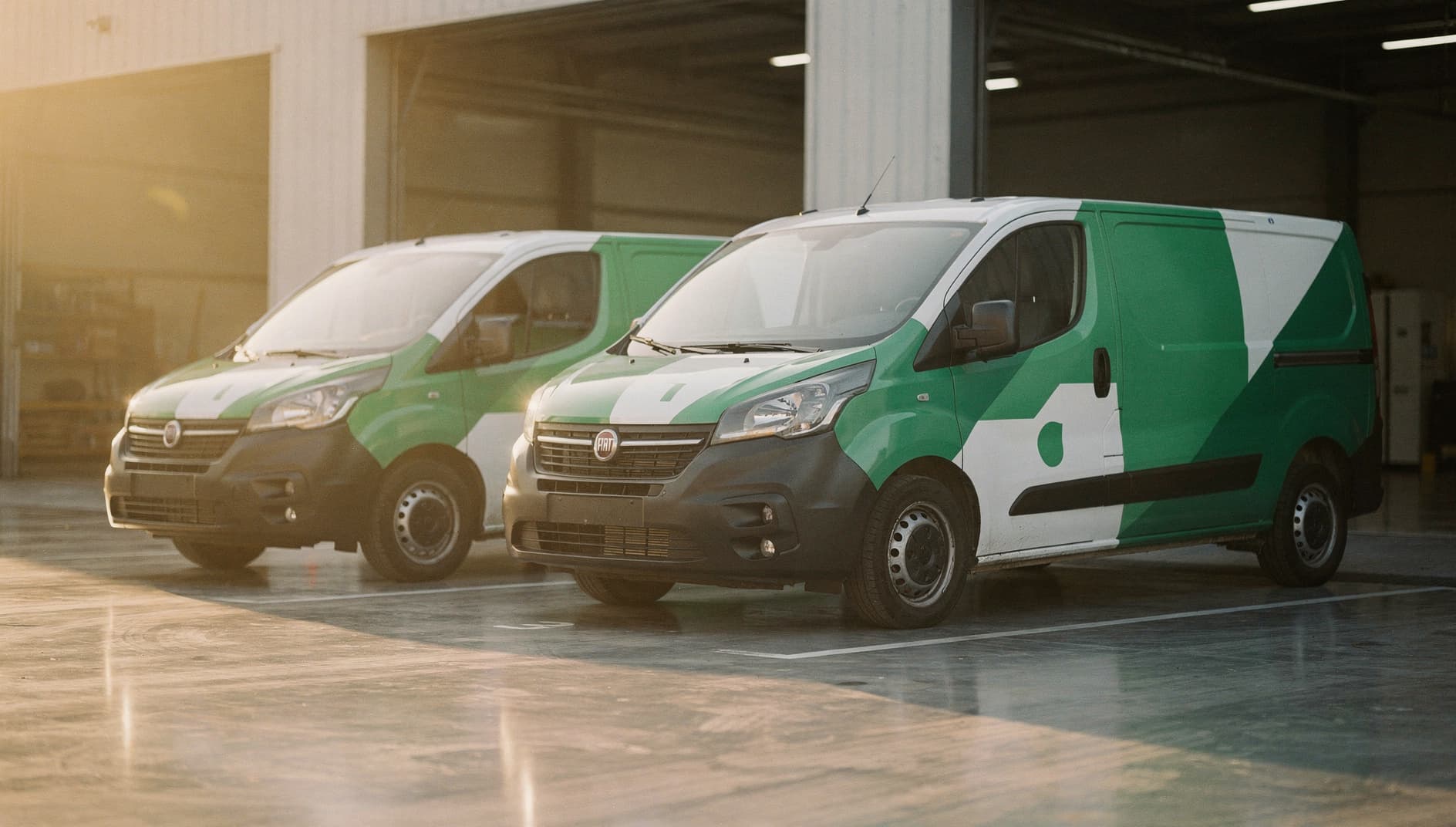
A delivery van is a moving billboard with a route. Every mile is an impression, and the rear door does most of the work because that is where following traffic spends its time. Surface gives you chassis-accurate templates for the fleet you actually run.
Why this format
Last-mile fleets
read like billboards.
The delivery-van fleet has shifted hard toward the Ford Transit, Ram ProMaster, and Mercedes-Benz Sprinter platforms over the last decade, with the Nissan NV phasing out and Chevy Express still common in legacy fleets. Each chassis has its own panel breaks, sliding-door geometry, and roof height — the wrap design has to start from the actual vehicle, not from a generic outline.
Wraps on delivery vans pay back differently than on service vehicles. Service trucks generate calls; delivery vans generate brand impressions at scale. A van running a 100-mile route in a dense market is in front of thousands of drivers and pedestrians per day. The math favors a small number of big design moves over a packed layout.
The rear door is the most-viewed panel on a delivery van. Following traffic dwells on the back of the van at every stoplight and during every slow merge. The brand mark, primary message, and a clear call to action belong there.
Design considerations
What a delivery van
wrap has to handle
Mileage equals impressions
A delivery van that runs 80 to 150 miles a day on city and suburban routes is on display for the duration of every drive and every stop. The design has to read at a glance from a passing car and reward a longer look from a person on the sidewalk.
Rear-door priority
Following traffic spends more time looking at the back of a van than at the side. The rear is where the brand mark, phone number, and call to action belong. Tail lights and the door split usually leave a clean rectangle to work with.
Sliding-door geometry
Most delivery vans have a curb-side sliding door that opens fifty times a day. Design has to allow the door to move without breaking up the brand at every stop — Surface flags the door track and handle as separate layers so artwork can be planned around them.
Highway viewing distance
Vans that run highway routes are seen at 60+ mph from a following or passing vehicle. Type smaller than 6" disappears at that speed; a single hero brand element with high contrast does more work than a packed layout.
DOT and operator markings
Federal regulations require commercial vehicle identification at a defined size — typically 2 to 3-inch lettering for the operator name and USDOT number on covered fleets. Treat these as fixed elements in the design, not as a final-step add.
FMCSA marking requirements apply to most commercial delivery fleets. Check the current rules for the operator’s classification before sending to print.
The workflow
From chassis to print
01
Pick the chassis
Surface ships templates for the full delivery-van lineup — Ford Transit, Ram ProMaster, Mercedes Sprinter, Nissan NV (legacy fleets), Chevy Express. Pick the wheelbase and roof height that match the operator’s build.
02
Layer in the regulatory copy
DOT number, operator name, and any state-required markings get placed first at the right size. Lock the layer so it survives revisions.
03
Design the rear, then the sides
Start with the rear panel because that is where most impressions land. Build the side-panel design around the same hierarchy and check the sliding-door behavior in the 3D preview.
04
Walk the camera
Move the 3D camera to the angles that matter — following car, side street, parked at a delivery stop. Adjust scale and contrast until the design reads at every distance.
05
Export panel-ready files
Surface splits the design by panel with bleed and overlap baked in. One file per chassis, ready for the printer.
Templates
Templates for every
van in the fleet.
Sprinter and full-size cargo van templates cover the modern delivery fleet. Compact cargo van templates handle the urban-route Transit Connect and ProMaster City. Pick the chassis and start designing.
FAQ
Common questions
How many impressions does a wrapped delivery van generate?
What van platforms wrap best?
How does delivery van wrap ROI compare to billboards?
What does a delivery van wrap cost?
What design considerations matter most for delivery vans?
Wrap your delivery fleet
in Surface.
Free trial. No credit card. Print-ready files for every van.
Keep reading
Related work
Solution
Surface for wrap shops
The production-floor view: panel-aware export, photo-real previews, and a workflow that fits the install team.
Open
Use case
Box truck wraps
Same delivery DNA, more side-panel canvas. Where the box-truck math beats the cargo-van math.
Open
Blog
Field notes from the wrap floor
Layout patterns, install gotchas, and the cost math behind a fleet wrap that earns its mileage.
Coming soon