Use case · Food trucks
The truck does
the selling.
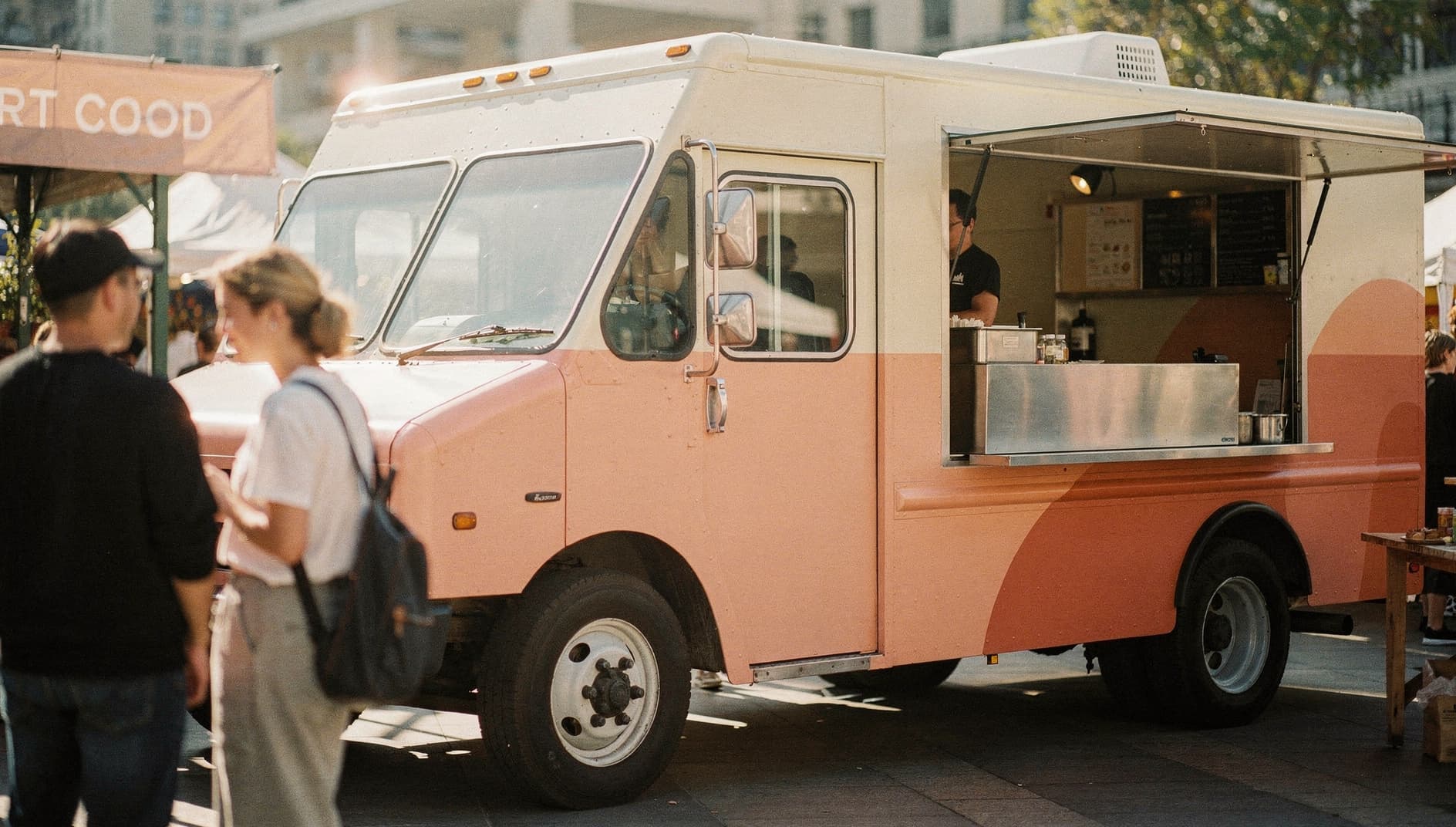
A food truck has under a minute to turn a passerby into a customer. The wrap does most of that work — which is why panel breaks, serving-window placement, and menu legibility all matter more on a food truck than on almost any other vehicle. Surface is built around those constraints.
Why this format
A rolling storefront
with thin margins.
Most operating food trucks are built on a step-van chassis (P-30, Workhorse W42, Freightliner MT45), a Sprinter-based mobile-kitchen platform, or a custom concession trailer. Each has its own panel geometry, equipment access, and serving-side layout — a single template doesn’t cover them all.
The wrap is one of the highest-leverage marketing investments the operator will make. The same truck shows up to events, catering jobs, lunch routes, and brand activations — every appearance is a brand impression. A redesign or repaint requires pulling the truck out of service, so getting it right the first time matters.
Operators who run multiple trucks have a second problem: fleet-color brand identity. A single hero truck design has to scale across two, five, or twenty units without losing the thing that made it work in the first place.
Design considerations
What a food-truck wrap
has to get right
Serving-window geometry
The service window is the most expensive cutout in the design. It anchors the customer-facing side, kills any graphic placed inside it, and forces a layout decision before you draw a line. Surface flags the window as a no-print zone so artwork flows around it.
Regulatory copy
Most jurisdictions require permit numbers, business name, and contact information visible at a defined size — federal DOT rules call for 2–3" letters on commercial vehicles, and many city health codes layer on top. Treat regulatory copy as a fixed element, not an afterthought.
Tall side panels
Step vans and concession bodies typically run 7–9 ft tall on the side, with vents, propane access doors, and equipment hatches breaking up the canvas. The wrap has to survive a panel cut and re-install if equipment is serviced.
30-foot read
A food truck is read from across the street, from the back of a 20-deep line, or from a passing car. Type smaller than 6" on the menu panel disappears from the curb. Color contrast and a single hero element do the work that small detail can't.
Wrap-around continuity
The corners of a step van are where the design either holds together or falls apart. Plan the wrap-around so brand color, hero illustration, and menu graphics resolve cleanly across the front, sides, and rear without orphaned shapes.
Health code and DOT lettering rules vary by state and city. Always confirm the current requirements with your local jurisdiction before sending to print.
The workflow
From chassis to print
01
Pick the chassis
Surface ships templates for the most common food-truck builds — step van (P-30, P-700), Sprinter-based mobile kitchens, custom concession trucks. Pick the one that matches your build and Surface loads the body geometry, including the service-window placeholder.
02
Map the no-print zones
Mark the actual service window, vent locations, and equipment access doors. These shift between builds even on the same chassis, so it pays to confirm with the operator before drawing.
03
Lay in brand and hero
Drop in the logo, hero illustration, and color blocks directly on the 3D vehicle. Walk the camera around the truck to check how the design reads from the serving side, the queue side, and the rear.
04
Drop regulatory copy
Place permit numbers, business name, and DOT lettering at the size and location your jurisdiction requires. Lock the layer so it survives the next round of revisions.
05
Export panel-ready files
Surface splits the design into panels with bleed and overlap baked in. Send to your printer or hand off to the install team with the panel map attached.
Templates
Start from a template that
matches your truck.
Surface ships food-truck templates for step vans, P-series concession trucks, and Sprinter-based mobile kitchens. Service windows, vents, and equipment access are mapped as no-print zones.
FAQ
Common questions
How much does a food truck wrap cost?
Do I need a USDOT number on a food truck wrap?
Can the wrap go around the service window?
How long will a food truck wrap last?
What's the most common food truck chassis?
Design your truck
in Surface.
Free trial. No credit card. Print-ready files at the end of it.
Keep reading
Related work
Solution
Surface for wrap shops
The production-floor view: panel-aware export, photo-real previews, and a workflow that doesn’t fight the install team.
Open
Use case
Box truck wraps
The same scale of mobile billboard, fewer cutouts. How to plan a side-panel design that holds together.
Open
Blog
Field notes from the wrap floor
Layout patterns, install gotchas, and the cost math behind a food-truck wrap that pays for itself.
Coming soon