Use case · Limo & livery
A vehicle that
suggests a service.
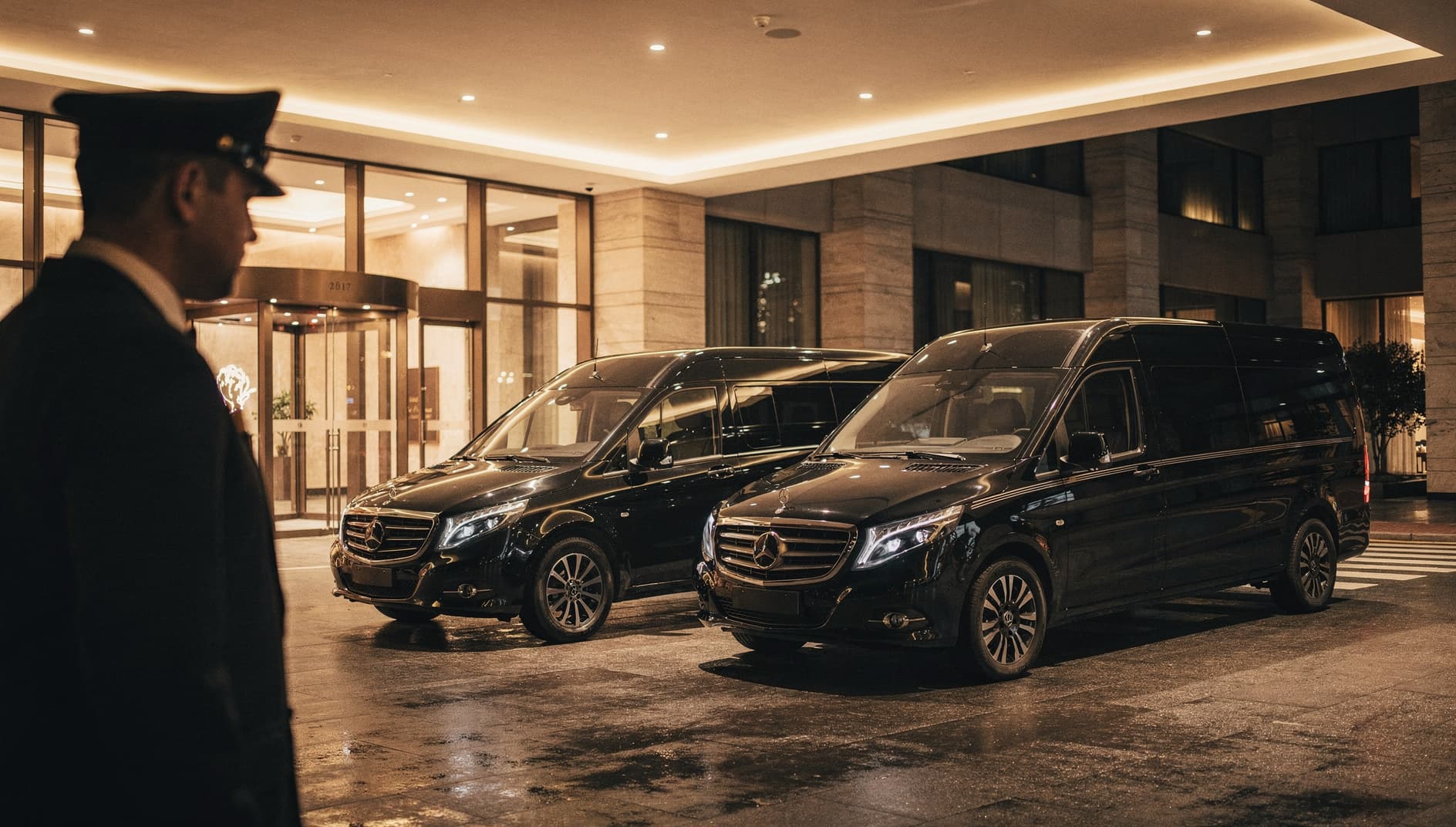
Limo and livery work is one of the few segments where the wrap should disappear. The brand is felt rather than read. Surface is built for the restraint — subtle decals, premium finishes, and regulatory-plate placement that fits the for-hire rules in your market.
Why this format
Discretion is
the product.
The for-hire and livery segment runs a wider range of vehicles than most operators outside the industry realize. Legacy livery still leans on Lincoln Town Cars and Cadillac XTS sedans where they remain in service; the modern executive fleet is built around Mercedes E and S-Class, Lincoln Navigator and Continental, and Cadillac Escalade and CT6.
Mercedes Sprinters and other passenger vans handle airport shuttle, group transport, and corporate event work. The Tesla Model X has become a popular premium upmarket choice for black-car operators who want a recognizable luxury electric option.
Many jurisdictions regulate for-hire vehicles separately from private vehicles. The New York TLC is the most-cited example, but cities and states across the country impose their own livery licensing and plate-display rules. The wrap design has to start from those constraints.
Design considerations
What a livery
wrap has to balance
Subtlety is the brand
A limo or livery vehicle works best when it suggests a service rather than advertises it. A small, well-placed wordmark on the rear quarter or a tasteful door decal communicates more than a full wrap. The customer is paying for discretion, and the vehicle has to look the part.
Regulatory plates and stickers
Many cities and states regulate for-hire vehicles with TLC plates, livery licenses, or specific decal requirements (the New York TLC is the most-cited example). Treat the regulatory plate window and decal placement as fixed elements before designing.
Premium finishes
Matte and satin laminates often outperform gloss on premium sedans and SUVs because they read as factory-finish rather than aftermarket. Surface lets you preview both finishes on the 3D vehicle so the operator can compare before committing.
Vehicle-class design language
A black sedan, a black Sprinter shuttle, and a Tesla Model X all serve different ends of the same business. The design system has to translate across the fleet — same wordmark, same color discipline, but adapted to each vehicle’s body and customer context.
Number and contact placement
Most operators run a small contact panel — phone or web — that the passenger can read on the rear quarter or the door. Keep it discreet and consistent across the fleet so repeat customers can recognize the operator without it shouting.
For-hire and livery rules vary by city and state. Confirm current requirements with your local TLC, public utility commission, or transportation authority before finalizing the design.
The workflow
From sedan to Sprinter
01
Pick the chassis
Surface ships templates for the legacy livery sedans (Lincoln Town Car, Cadillac XTS), the modern executive sedans (Mercedes E and S-Class, Lincoln Continental and Navigator, Cadillac CT6 and Escalade), the Mercedes Sprinter for shuttle service, and the Tesla Model X for premium upmarket.
02
Set the regulatory layer
TLC plate window, livery decals, and any city or state-required markings get placed first at the size and location your jurisdiction requires. Lock the layer.
03
Design the brand layer
Wordmark, monogram, or contact panel. Use the 3D preview to walk around the vehicle and confirm the brand reads as a service signal, not a marketing decal.
04
Test the finish
Surface previews matte, satin, and gloss laminates on the actual 3D vehicle. For premium fleets, this is often the deciding factor in the design.
05
Export panel-ready files
Surface splits the design by panel with bleed and overlap baked in. Most livery designs are partial wraps or decal kits, so the export is small — but precise.
Templates
Templates for every
vehicle in your fleet.
Sedan templates for the executive cars. Sprinter templates for shuttle and group transport. SUV templates for the Escalade, Navigator, and Tesla Model X side of the fleet.
FAQ
Common questions
How discreet should a livery wrap be?
What vehicles are typical for livery service?
Do I need TLC or hack-license display on the wrap?
What's the typical cost?
Does a livery wrap hurt the resale value?
Brand your livery fleet
in Surface.
Free trial. No credit card. Print-ready files for every vehicle.
Keep reading
Related work
Solution
Surface for wrap shops
Production-floor view: panel-aware export, photo-real previews, and a workflow that fits the install team.
Open
Use case
Real estate vehicles
Same restraint principle, applied to a different audience and a different licensing regime.
Open
Blog
Field notes from the wrap floor
Restraint-first design, finish choices, and the operator economics behind a livery that pays.
Coming soon