Use case · Real estate
Brokerage first.
Agent second.
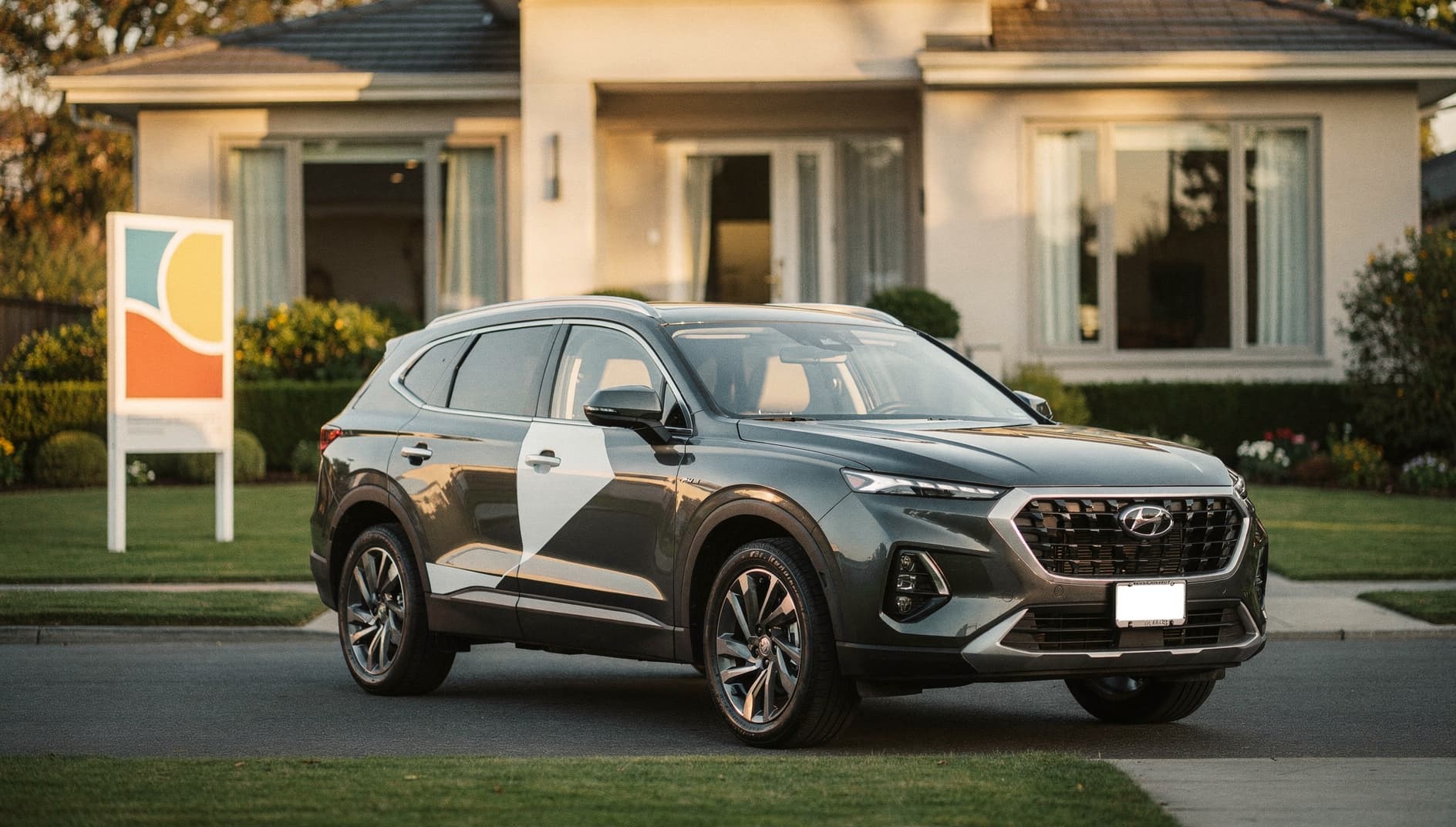
A real estate vehicle wrap has to hold the brokerage’s identity while making space for the agent. Surface is built for the hierarchy decisions that come with it — license display, photo placement that reads at speed, and finishes that match the vehicle the agent actually drives.
Why this format
A traveling
business card.
Real estate is a relationship business with a strong local geography. Agents work the same neighborhoods week after week, and the vehicle they drive becomes a passive recognition signal in those neighborhoods. A well-designed wrap is one of the highest-recall touchpoints in the entire agent marketing stack.
Most agents drive mid-size SUVs and premium sedans — vehicles they chose because they expect to spend a lot of time in them with clients. The wrap design has to respect that context. A loud, billboard-style wrap on a luxury SUV often reads as overcommercial; a restrained brokerage mark with agent contact reads as established.
Brokerages running fleet branding programs have a different problem: brand consistency at scale across dozens of agent vehicles, with the brokerage license and broker-of-record information visible per state real estate commission rules. The system, not the single design, is the deliverable.
Design considerations
What a real estate
wrap has to balance
Agent-vs-brokerage hierarchy
The brokerage owns the trust signal — the brand color, mark, and license. The agent owns the personal connection. The wrap has to make both legible without one swallowing the other. Most successful designs lead with the brokerage and treat the agent as the second tier.
Photos at speed
Headshots smaller than about 8 inches across stop being recognizable from a passing car. Agent photos at typical car-side scale work best as a clear, high-contrast portrait — not a busy headshot — and only on the side where they have room to breathe.
Broker license compliance
Many states require the brokerage name and license number on any vehicle representing the brokerage in real estate activity. Specific rules vary by state real estate commission. Treat the license display as a designed element, not a corner sticker.
Subtlety wins
Real estate vehicles work best as a subtle brand signal, not a full-color shout. A tasteful half-wrap or a logo-and-contact decal often outperforms a full wrap because it suggests a professional, not a marketing-heavy operator.
Premium-vehicle finishes
Most agent vehicles are mid-size SUVs and premium sedans — Tahoe, Suburban, Highlander, Lexus RX, ES, Mercedes E-Class. Match the wrap finish to the vehicle: matte and satin laminates often read as more premium than gloss on these models.
Real estate license display rules vary by state. Confirm current requirements with your state real estate commission before finalizing the design.
The workflow
From brokerage to agent vehicle
01
Pick the chassis
Surface ships SUV templates for Tahoe, Suburban, Highlander, Explorer, Grand Cherokee and sedan templates for the most common premium and mid-size models. Pick the agent’s vehicle and Surface loads the body geometry with door, hood, and rear-hatch panels mapped.
02
Set the brokerage layer
Drop in brokerage mark, brand color, and the license-required copy at the size and location your state mandates. Lock the layer.
03
Add the agent layer
Agent name, contact, and an optional headshot. Use the 3D preview to check that the photo and contact info hold from the side, the rear, and from a passing car.
04
Decide on coverage
Full wrap, half wrap, or door-and-rear decals. Surface lets you toggle coverage to see how the same brand system reads at each level — useful for offering tiered packages to a brokerage’s agents.
05
Export panel-ready files
Surface splits the design by panel with bleed and overlap baked in. One file per agent vehicle, ready for the printer.
Templates
Templates for the cars
agents actually drive.
SUV templates for the mid-size and full-size segment. Sedan templates for premium and mid-size models. Door-only and rear-hatch decals for agents who want a lighter touch.
FAQ
Common questions
What information needs to appear on a real-estate vehicle wrap?
What vehicles do real-estate agents typically wrap?
How do I balance agent and brokerage branding?
What's the typical cost for a real-estate vehicle wrap?
How visible should the agent's photo be on the wrap?
Brand your agent fleet
in Surface.
Free trial. No credit card. Print-ready files for every vehicle.
Keep reading
Related work
Solution
Surface for wrap shops
Production-floor view: panel-aware export, photo-real previews, and a workflow that fits the install team.
Open
Use case
Limo & livery
Same restraint, different audience. Where subtle branding outperforms loud branding.
Open
Blog
Field notes from the wrap floor
Layout patterns, install gotchas, and the cost math behind a real-estate wrap that earns recall.
Coming soon